When Your Best Work Becomes Your Biggest Obstacle: Navigating the Evolution of Creative Standards
The Uncomfortable Truth About Getting Better
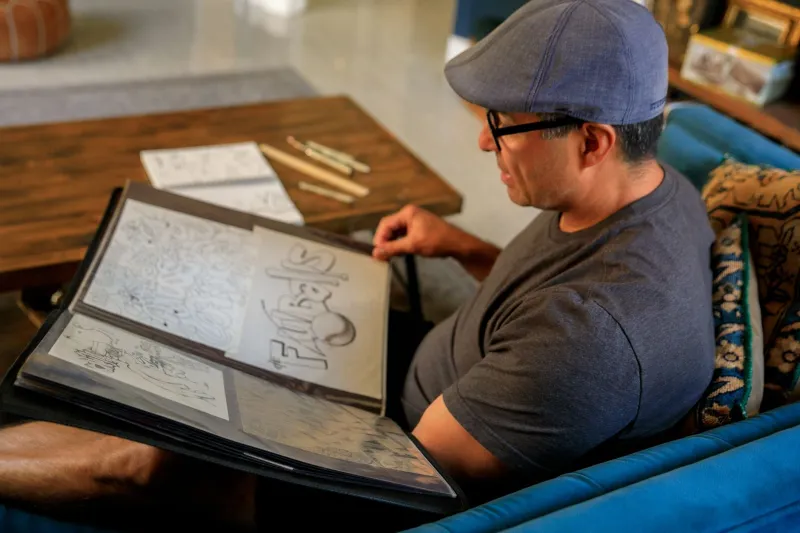
There is a particular kind of discomfort that arrives quietly, usually sometime in the middle of a career. You pull up work that once felt exceptional—pieces you submitted to competitions, projects you featured prominently in your portfolio, samples you sent to clients with genuine pride—and something feels off. The proportions seem slightly wrong. The color palette feels dated. The concept, which once struck you as bold, now reads as obvious.
This experience is not a crisis. It is evidence.
When your critical eye outpaces your archived output, it means your aesthetic judgment has grown beyond the moment those pieces were created. That gap—between who you were when you made something and who you are now as you evaluate it—is the most reliable indicator that your creative standards are genuinely evolving. And yet, for a significant number of creative professionals, the instinct is not to celebrate that gap. It is to close it by defending the older work, reframing it, or quietly hoping no one notices the distance between it and what you are capable of today.
That instinct, however understandable, is worth examining carefully.
How Taste Develops Without Announcing Itself
Creative standards do not shift in dramatic, identifiable moments. They accumulate through exposure—the body of work you consume, the collaborators you engage with, the client feedback that challenges your assumptions, the failures that force recalibration. Over time, what once satisfied you begins to feel insufficient, not because the work was bad, but because your frame of reference has expanded.
This is precisely how it should function. A painter who is equally satisfied with their work at forty as they were at twenty-two has likely stopped pushing. A designer who applies the same visual logic they developed in their first agency role a decade later is probably coasting on established instincts rather than developing new ones.
The challenge is that professional reputation often lags behind personal growth. The work that established your name—that earned you early clients, press mentions, or institutional recognition—has a staying power that your internal evolution does not. Clients who hired you based on that early work may expect consistency. Platforms that featured you may have anchored your identity to a specific aesthetic period. Your own website may still lead with pieces that no longer represent how you think or work.
This lag creates a structural tension that most creative professionals encounter but rarely address directly.
The Portfolio as Time Capsule Versus Living Document
Many professionals treat their portfolio as a record of achievement—a curated archive of the strongest work they have produced. That framing is not wrong, but it is incomplete. For anyone whose practice continues to develop, a portfolio built entirely around past accomplishment begins to function as a ceiling rather than a foundation.
Potential collaborators and clients who are sophisticated about creative work are not only evaluating the quality of what they see. They are reading the trajectory. They are asking, implicitly, whether the person who made these pieces is still moving forward or whether this archive represents the outer edge of what you are likely to produce.
A portfolio that prominently features work you privately consider outdated sends a signal you may not intend: that this is the best you have done, rather than a marker of where you once were. Conversely, a portfolio that documents growth—that allows viewers to trace an evolving sensibility across time—communicates something far more compelling: that you are a professional whose work will continue to develop in ways that are difficult to predict and worth staying close to.
This does not mean scrubbing your history. Older work, contextualized honestly, can be extraordinarily powerful. The distinction lies in how it is framed. Work presented as a proud artifact of an earlier period, placed within a narrative of development, reads very differently than work presented as a current capability.
Evolving Publicly Without Appearing Inconsistent
One of the more legitimate concerns creative professionals raise about openly acknowledging their own evolution is the risk of appearing uncertain or unreliable. If you have built a client base around a specific visual language or approach, stepping away from it publicly can feel like a repudiation of the very work that generated trust.
This concern deserves to be taken seriously, but it often overstates the risk. Most clients and collaborators are not looking for stasis. They are looking for a professional whose judgment they can trust—and judgment, by definition, improves over time. The creative who says, plainly and without apology, "my thinking on this has matured" is not undermining confidence. They are demonstrating the kind of self-awareness that distinguishes a practitioner with genuine standards from one who is simply executing on autopilot.
The more effective approach involves narrating the evolution rather than simply executing it. Update your positioning with context. When you introduce newer work, explain—briefly and without overexplaining—what shifted in your thinking and why. This transforms what might otherwise appear as inconsistency into evidence of an active, developing mind. It also invites the kind of collaborator who values that process, which is almost always a better professional match than one who simply wants a known quantity replicated indefinitely.
Releasing the Obligation to Defend
Perhaps the most significant shift available to any creative professional grappling with this tension is the decision to stop treating past work as something that requires defense. Defending older work—insisting it holds up, contextualizing its limitations before anyone has questioned them, or avoiding situations where it might be compared to newer output—is an enormous expenditure of energy that produces almost no professional return.
Work made at a previous stage of development does not need to be protected. It needs to be understood for what it was: the best thinking available at the time, produced by someone who has since continued to grow. That framing is not a concession. It is an accurate and honest account of how creative development actually works.
The professionals who navigate this most gracefully are those who have internalized a simple distinction: the work is a record of where you were, not a claim about where you are. When that distinction is clear in your own thinking, it becomes far easier to present your archive honestly, discuss its limitations without embarrassment, and redirect attention toward the work that genuinely reflects your current capabilities.
Growth as the Most Coherent Brand
In a landscape where creative professionals are increasingly expected to maintain a visible, consistent presence across platforms and channels, the pressure toward static self-presentation is real. Consistency is often treated as synonymous with reliability, and reliability as synonymous with quality.
But there is a different kind of coherence available—one built not around a fixed aesthetic signature but around a consistent commitment to development. The professionals who build the most durable reputations are often those whose work cannot be fully predicted, because their standards continue to move. Their coherence is not visual or stylistic. It is dispositional: a recognizable seriousness about the practice, a willingness to be dissatisfied with their own output, and a forward orientation that makes their next project more interesting than their last.
That kind of coherence is not undermined by evolution. It is constituted by it.
Your taste will continue to shift. Your standards will continue to rise. The work that satisfied you last year will eventually feel insufficient—and when it does, that feeling is not a problem to be managed. It is the most reliable signal that your creative practice remains alive.