The Generalist's Edge: Turning a Multi-Disciplinary Background Into a Positioning Advantage
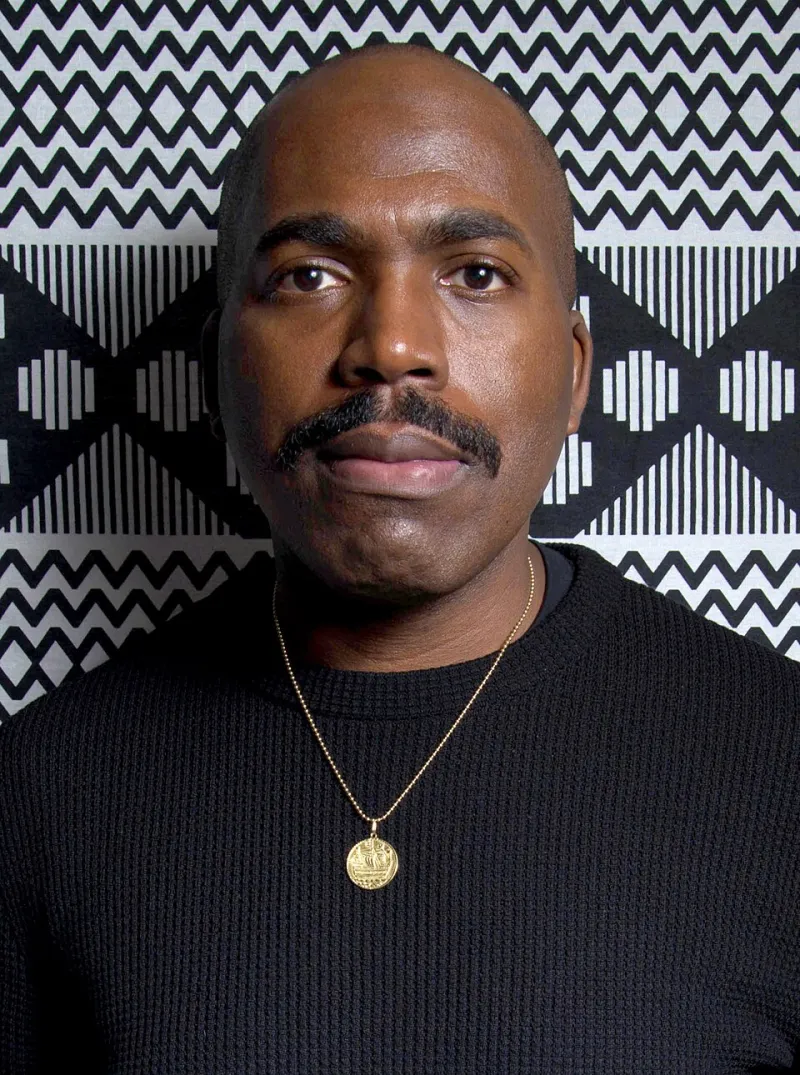
Photo: Kay Hickman, CC BY-SA 4.0, via Wikimedia Commons
At some point, nearly every multi-disciplinary creative professional has sat across from a potential client or employer and watched their eyes glaze over. You have explained your background — the way your design work informs your writing, how your teaching experience sharpens your strategic thinking, the thread that connects what might appear to be an eclectic career — and the response has been some version of polite confusion. So what exactly do you do?
It is a disorienting question for someone whose value lies precisely in the connective tissue between disciplines. And it reflects a real tension in the American creative marketplace: the systems built to evaluate and hire talent are largely optimized for specialists, while the most complex and interesting problems increasingly require people who can move fluidly across domains.
The challenge for the multi-disciplinary creative is not one of capability. It is one of translation.
Why Specialization Gets All the Attention
The cultural emphasis on specialization within creative industries is not arbitrary. Specialists are easier to evaluate. A client who needs a brand identity can assess a designer's portfolio against a clear set of criteria. An agency looking for a copywriter knows exactly what samples to request. The more narrowly defined the role, the more legible the candidate.
This legibility has real economic value, and it would be naive to dismiss it. Specialists often command premium rates within their specific domains, and the career ladder within most traditional creative organizations is built for people who deepen rather than broaden their expertise.
But legibility is not the same as value. And the assumption that the specialist path is the only path to a sustainable creative career reflects a particular model of work that is becoming less universal by the year.
The Problems That Reward Range
Consider the kinds of challenges that land on the desks of creative directors, brand consultants, and senior strategists at successful organizations. They are rarely clean, single-discipline problems. They require someone who understands visual communication and narrative and audience psychology and the operational realities of implementation. They require, in other words, exactly the kind of integrated thinking that a multi-disciplinary background develops.
The designer who also writes brings something to a brand engagement that a designer-writer team cannot fully replicate: a single integrated perspective that holds both the visual and verbal dimensions of a brand in simultaneous consideration. The strategist who also makes things understands the gap between concept and execution in a way that purely conceptual thinkers often do not. The educator who also practices brings a reflective capacity to their work that purely practitioner-focused professionals rarely develop.
These are genuine competitive advantages. The problem is that most multi-disciplinary creatives have been conditioned to present them as apologies.
Reframing Range as a Positioning Asset
The shift from liability to advantage begins with language. Most generalists describe their background as a list of capabilities: I do design, writing, strategy, and consulting. This formulation sounds unfocused because it is structured as a catalog rather than a claim.
Effective positioning for the multi-disciplinary creative requires identifying the specific intersection where your disciplines converge and naming the particular kind of problem that intersection equips you to solve. This is not about collapsing your range into a false specialization. It is about articulating the coherent perspective that your range produces.
A few frameworks that have proven useful:
The Through-Line Method: Identify the consistent question or problem you find yourself drawn to, regardless of which discipline you are working in. That question is your actual specialization. The disciplines are simply the tools you have developed to address it.
The Integration Claim: Rather than listing what you do, describe what becomes possible when your disciplines work together. I help organizations develop brand identities that hold together across every touchpoint because I understand both the visual and verbal dimensions of communication is a positioning statement. I do design and writing is a job description.
The Client-Centered Translation: Identify the specific type of client or project that your particular combination of skills serves better than any single-discipline practitioner could. Build your positioning language around that client's experience, not your own background.
Case Studies in Unconventional Positioning
Consider the trajectory of professionals who have successfully navigated this challenge. The information architects who helped define the early web were, almost without exception, people who had come from library science, cognitive psychology, graphic design, and writing — none of whom fit neatly into any existing category. They succeeded not by becoming specialists but by naming a new category of expertise that their range uniquely qualified them to occupy.
More recently, the emergence of content strategy as a recognized discipline was driven largely by people who combined editorial judgment, user experience thinking, and organizational consulting — a combination that had no established label until practitioners began articulating their integrated value clearly enough that clients could recognize and hire for it.
In each case, the breakthrough came not from narrowing but from naming: identifying the specific intersection of capabilities with enough precision that the market could understand what was being offered.
Navigating the Practical Realities
Positioning is not the only challenge multi-disciplinary creatives face. There are structural realities to navigate as well.
Rate-setting becomes more complex when you work across disciplines that carry different market rates. The most sustainable approach is to price based on the value of the integrated outcome rather than the component skills — which requires both confidence in your positioning and clients who understand what they are purchasing.
Portfolio presentation requires more deliberate curation. Rather than organizing work by medium or discipline, consider organizing it by the type of problem solved or the type of client served. This keeps the focus on your perspective and judgment rather than your technical range.
Networking across disciplinary communities means you have more potential points of connection than the specialist, but also more work to do in establishing credibility within each community. Selective depth — becoming genuinely known in two or three overlapping communities rather than superficially present in many — tends to be more productive than broad but shallow visibility.
The Long Game
The creative professionals who build the most durable careers are rarely those who fit most neatly into existing categories. They are the ones who developed a clear enough sense of their own perspective — the particular way their mind engages with problems — that they could articulate their value even when no established category existed to contain it.
If your strengths span multiple disciplines, the work ahead of you is not the work of choosing one. It is the work of understanding your range well enough to name what it produces — and then having the conviction to build a career around that claim.